About
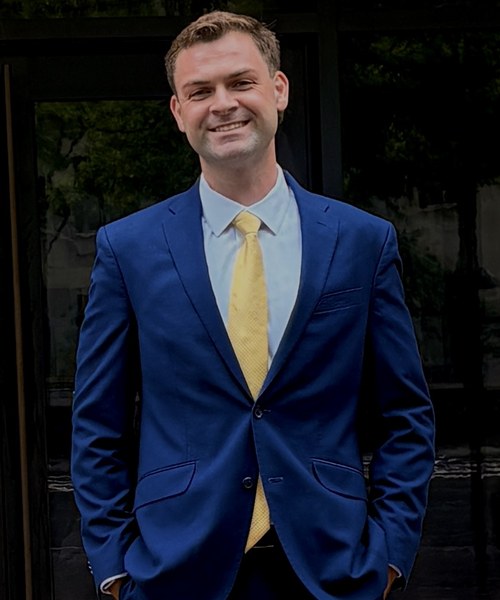
The honest answer to “what do you do?” has never fit in one sentence, so here is the longer version.
For the past five years I have worked in organ procurement surgery, more than 850 recovery cases and 2,250+ organs recovered across dozens of hospital systems in the Southeast, most of them in the middle of the night, all of them time-critical. Organ recovery is a strange and clarifying line of work. Every case is a coordination problem involving surgeons, ICU teams, couriers, aviation, transplant centers, and a family on the worst day of their lives. Nothing about it forgives sloppiness. It taught me that the systems around a task matter as much as the skill inside it.
Before that, I was a pre-med zoology student at the University of Florida, working in research labs, transplant and hepatobiliary surgery, a liver transplant laboratory at Mayo Clinic, and, briefly and happily, a honey bee lab. I was accepted to medical school and deferred. Somewhere between the lab bench and the operating room I realized that what actually held my attention wasn’t any single discipline. It was the question of how complicated systems, biological, institutional, technological, actually work, and why some of them adapt while others stagnate.
That question explains most of the unusual parts of my life. It’s why I built a small eCommerce and contracting business and ran it remotely while working surgical call and finishing an MBA in IT management. It’s why I’m working towards my pilot license and kept flying after an engine failure on takeoff. It’s why I’ve traveled independently to more than fifty countries, not for the landmarks, but because being invited into a stranger’s home in rural China or a family dinner in Lebanon teaches you things about people and institutions that no book will. It’s why I learned Spanish, am working on more languages, and keep studying anyway.
It’s also why I keep ending up in rooms where policy gets made. At eighteen, after the Parkland shooting, I researched trauma survivability data, consulted emergency physicians and sheriffs, and presented to my county school board, which put trauma kits in every public school facility in the county. Later I traveled to Washington to brief Senate and Congressional offices on federal rules governing organ procurement. Both times the work was the same: take something technical, make it legible to people who have to decide, and let the evidence carry the argument. These days that instinct powers an ongoing public-records project on how counties adopt and oversee automated license plate readers, research I share with local officials in the belief that new technology serves everyone better, law enforcement included, when the rules are clear and the record is public.
That interest has grown into a standing preoccupation with the role government plays in our lives, how policy actually reaches a kitchen table, why some public institutions earn trust while others spend it, and what it would take for government to run with the competence of the best systems I’ve worked inside. I’d rather study how governance works than shout about politics. The first changes lives; the second mostly changes channels.
I don’t think of any of this as a resume. I think of it as one long attempt to understand how people organize themselves to solve problems that matter, in medicine, in government, in business, and increasingly in artificial intelligence, which I use daily and think about constantly.
This site is where I write that thinking down. The essays are the point. Everything else is context.