The Fly-Out
It starts with a phone call that empties your evening of everything else. There is an organ recovery, in another city, and a surgical team has to be on it. You learn the essentials, which organs, which teams, what the clock looks like, and then your world narrows to a checklist you could run in your sleep, because some nights you effectively do.
We assemble at the transplant center. There is a particular quiet to a team gathering for a fly-out. Everyone knows why we’re going. Somewhere behind the case that’s about to consume our night is a family living through the worst hours of their lives, and their answer, in the middle of that grief, was yes. You feel the weight of that yes in the room before anyone says a word. It rides with us the entire way.
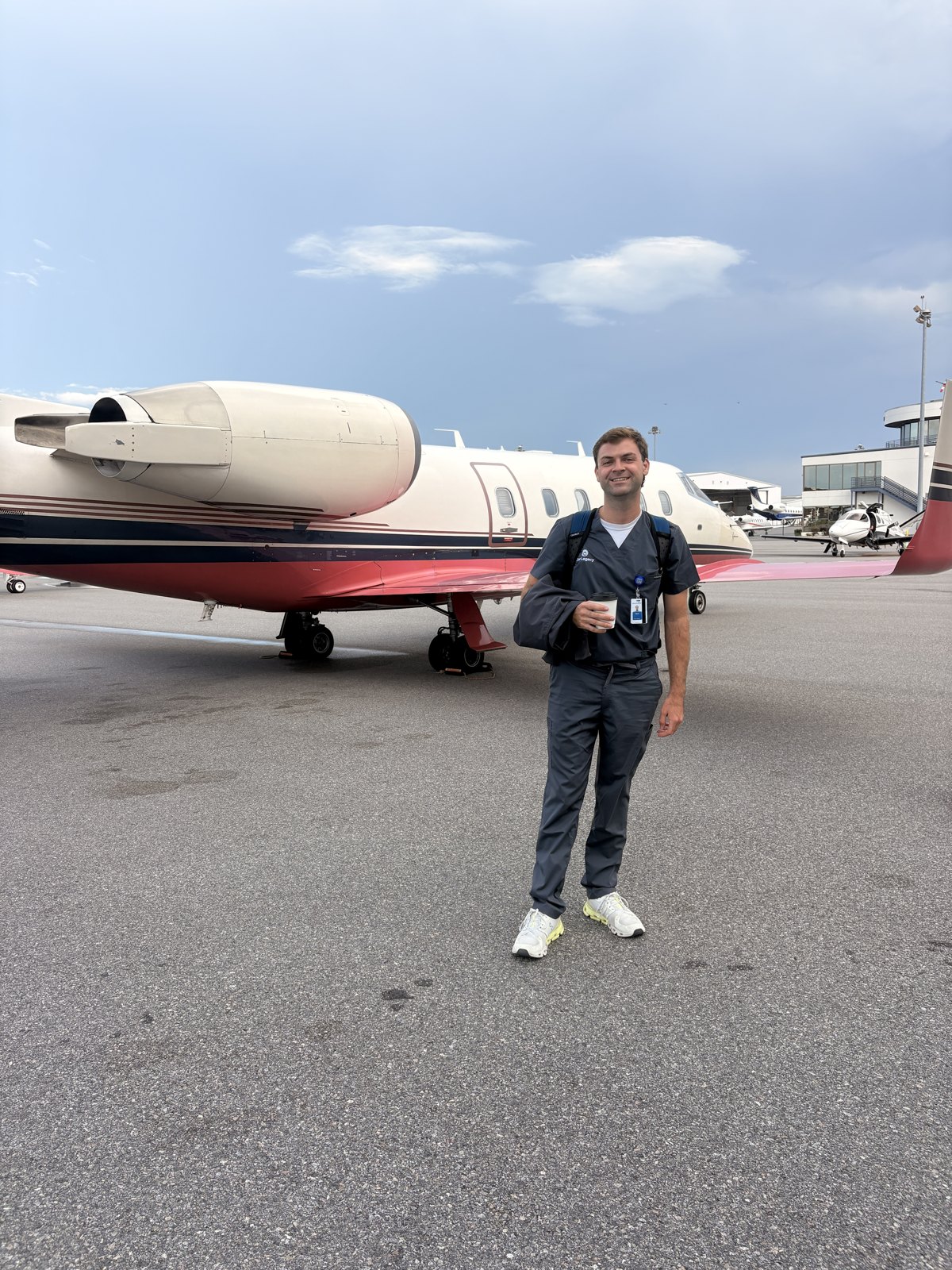
A vehicle takes us to the FBO, the small, private side of the airport where a chartered jet is already spooling up. People assume the jet is glamorous. It isn’t, and it also is. It’s a tool, the same as a scalpel: the fastest possible way to move a surgical team through the dark. But I would be lying if I said there isn’t a moment, walking across the tarmac with your bag over your shoulder, engines whining, when you feel the scale of the machine that has been set in motion, pilots, coordinators, couriers, nurses, surgeons, air traffic control, all of it converging so that a stranger somewhere gets to keep living. You climb the stairs and the door seals and the runway lights start to slide, and you review the plan one more time because the plan is what you can control.
On the other end, an ambulance is waiting at the airport. Lights and sirens through a city you barely register. I have watched intersections part for us at speed, red wash strobing across the windows, and felt the strange doubleness of it: outside, we are an emergency; inside, we are calm, rehearsing sequences, checking times. Both are true. That is the job in a single image, urgency on the outside, order on the inside.
The operating room, when we walk in, is a small city of teams. On a multi-organ recovery there may be a heart team, a liver team, a kidney and pancreas team, and us, each flown or driven in from a different program, many of us meeting for the first time over the table. It should be chaos. It is the opposite. Everyone knows their organ, their field, their timing, their turn. There is a choreography to it that still moves me after hundreds of cases: strangers operating around one another in a shared field, sequencing themselves by viability clocks, communicating in short, exact sentences. Before it begins, the room pauses. Some hospitals read a few words aloud about the person on the table. However it’s done, the silence says the same thing: this was a life, and what happens in this room tonight is only possible because of it.
Then the work. For our team, the lungs, inspecting, protecting, and finally recovering them with a care that borders on reverence, because that is what they deserve. There is a moment in every recovery when the organ is free and every eye in your team is on your hands, and time gets very simple. Preserve. Package. Label. Verify. Confirm. The cooler closes with a click that sounds louder than it is.
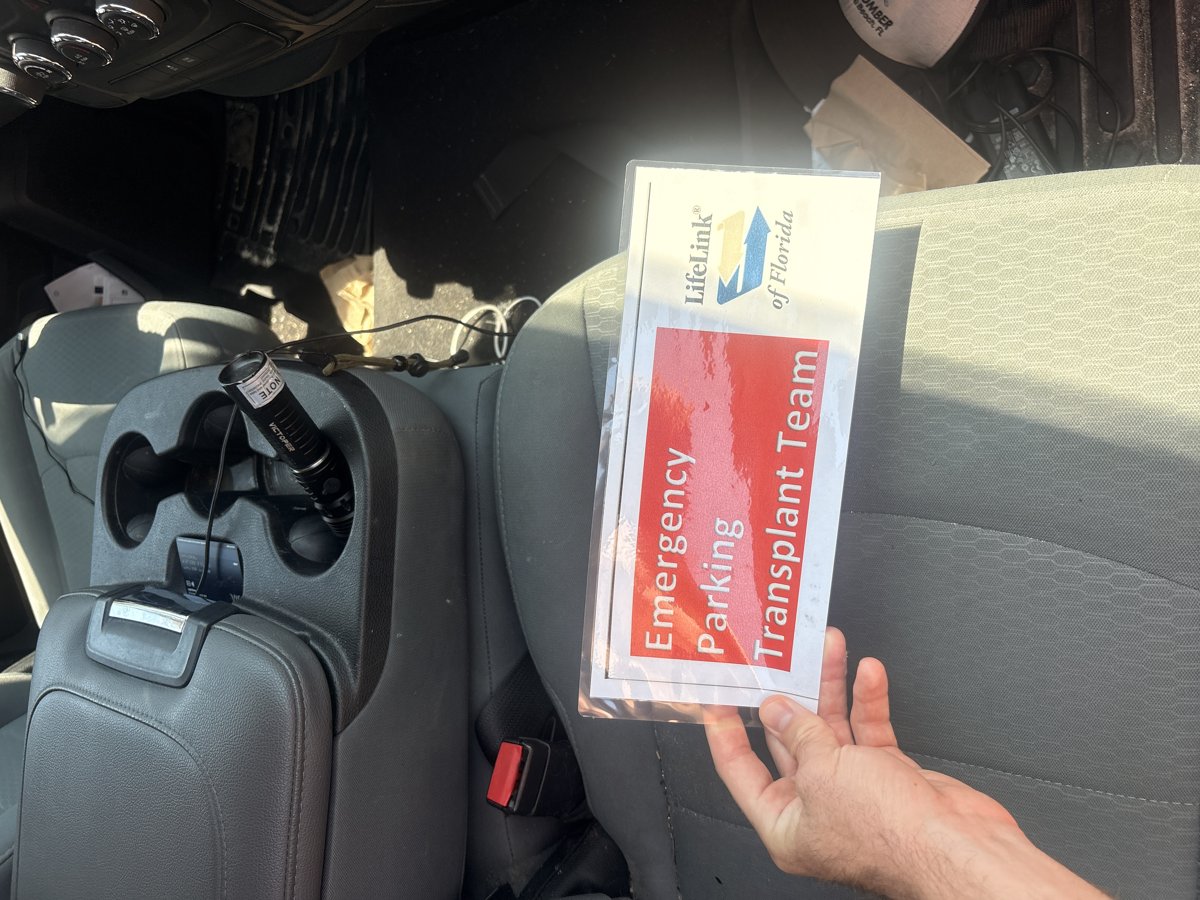
And then we move. Nobody runs in a hospital, and if there were a safe way to, we would. Instead there is a purposeful speed to the exit that everyone in the building seems to recognize: out of the OR, down corridors, into the ambulance, lights and sirens back to the airport, wheels up, the city shrinking under the wing with a set of lungs riding in the cabin behind us. The return leg is quiet. We are exhausted, all of us, but it is exhaustion stacked on top of urgency, because the countdown that started when the blood supply stopped is still running, and every one of us feels it. On the far end the sequence reverses one last time: tarmac, ambulance, corridors, and finally the handoff, placing what we carried into the hands of the transplant team whose patient has been waiting, sometimes for years, prepped and hoping on a table upstairs.
Here is what I want people to understand about that handoff. Somewhere above us, a person who could not breathe is about to. Their first full breath will come from a stranger’s last gift, moved across state lines in the middle of the night by a relay of people who will never be thanked by name and do not need to be. I have been part of more than eight hundred and fifty of these cases, and the honest truth is that it has never once felt routine. It feels like carrying something holy through a world that has no idea it’s passing by, past gas stations and toll booths and sleeping neighborhoods, in an unmarked cooler, on an ordinary night.
I am proud of this work in a way I’m still learning to talk about. Not proud of myself, exactly, proud of the system: the family who said yes, the coordinators who orchestrated forty moving parts by phone, the pilots who flew, the strangers in four surgical teams who trusted each other on sight, the medicine that makes any of it possible. My part is one link in that chain. But I’ve learned that a chain like this is only as strong as the reverence each link brings to it, and so every time the pager goes off, I go, and I bring all of mine.
Somewhere tonight, someone is breathing. That is the entire job description. It is the best one I know.