What Organ Recovery Taught Me About Systems That Can’t Fail
Most people never think about how an organ gets from one body to another. That is the point. When the system works, it is invisible. I have spent five years and more than 850 procedures inside that system, and I have come to believe it is one of the best case studies available in how humans organize around problems that do not allow second attempts.
Here is what a recovery actually involves. A donor is identified, usually late at night, usually hours away. A procurement organization coordinates the hospital, the family, the medical evaluation, and the allocation of each organ to a recipient somewhere on a national list. Surgical teams converge from multiple transplant centers, some by car, some by chartered aircraft. In the operating room, teams that have often never met work in a shared field on a compressed clock, because every organ has a fixed window of viability that starts the moment its blood supply stops. Then everything reverses: organs move out by courier and jet, each toward a recipient whose own surgery is already underway. There is no pause button anywhere in this sequence.
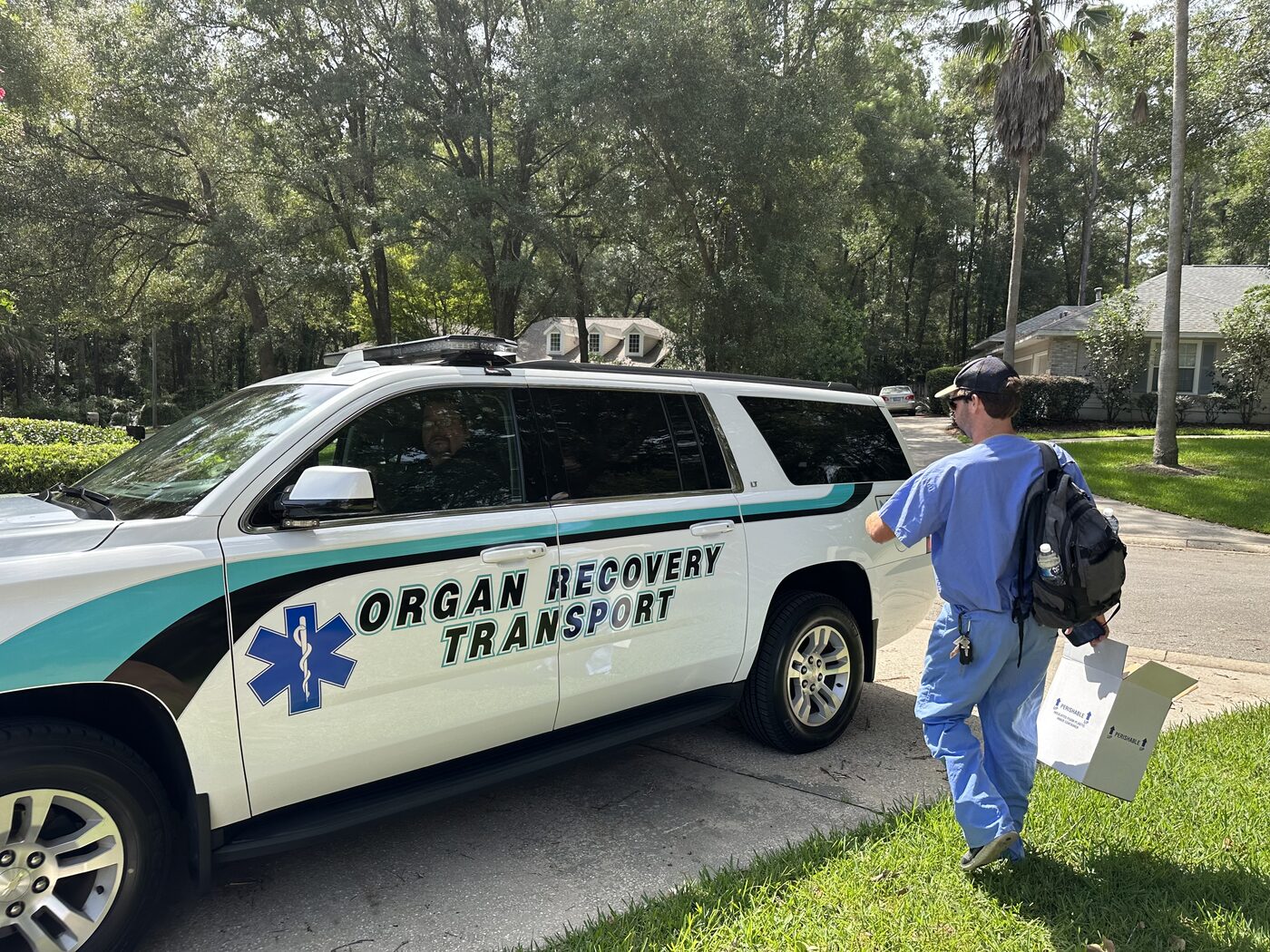
The remarkable thing is not that this sometimes goes wrong. It is how rarely it does. And the reasons why hold lessons that apply far beyond medicine.
The system assumes things will break
Weather delays the jet. The donor becomes unstable. An organ looks different on the table than it did on imaging. A recovery is not a plan executed; it is a plan continuously repaired. The people who do this work well are not the ones who prevent surprises; no one prevents surprises. They are the ones who have already thought about the second and third options before the first one fails. Good systems are not built for the average night. They are built for the worst one.
Roles beat heroics
During one recovery, a major vessel was nicked in the surgical field. I spent nearly an hour holding it closed with a finger while the rest of the team worked around me and completed the case. Reaching for an instrument was never the better option, because what I was doing was working, and in that field a working solution beats an elegant one. The organs were donated. I tell that story not because it was heroic; it was the opposite. It was the least skilled task in the room. But it was mine, and holding it let five other people keep doing theirs. High-consequence systems run on this logic: in the critical moment, the question is never “who is most talented,” it is “does everyone know exactly what they hold.”
Documentation is not bureaucracy
Organ procurement is federally regulated, and the paperwork is relentless. Early on, that felt like friction. It is not. Chain of custody, time stamps, quality records, these are how a system distributed across strangers, states, and time zones maintains a single shared memory. When I later found myself in Washington briefing Senate and Congressional offices on a federal rule governing procurement organizations, the lesson deepened: the metrics a regulator chooses quietly redesign the behavior of everyone downstream. If you want to understand any institution, read what it is required to write down, and what it is measured on.
Trust is the actual infrastructure
The formal system of regulations, allocation algorithms, and contracts is real. But on a given night, what actually moves things is that a coordinator trusts a surgeon’s judgment over the phone, a hospital lets an outside team into its OR at 3 a.m., and a family says yes to strangers. Every durable system I have seen since, in business, government, or technology, has this same shape: hard rules on the outside, earned trust doing the load-bearing work inside.
I think about this constantly as artificial intelligence moves into consequential domains. The interesting questions are rarely about capability. They are the organ-recovery questions: What happens when a component fails at 3 a.m.? Who holds what, and do they know it? What does the system write down, and who trusts whom, and why? Fields that cannot fail figured out their answers the hard way, over decades. The fields that are new would do well to study them.